
Corn e Pepe
What happens when sweet summer corn meets one of Rome's most iconic pasta dishes?

The four classic Roman pasta dishes are cacio e pepe, gricia, amatriciana, and carbonara. They’re all built on a similar foundation. Cacio e pepe starts with Pecorino Romano and black pepper. Add guanciale and you’ve got gricia. Stir in tomato and it becomes amatriciana. Swap the tomato for eggs and you’ve made carbonara. It’s incredible how just a few ingredients can create four completely different pasta dishes.
Of the four, cacio e pepe may be the simplest, but don’t let the short ingredient list fool you. It’s also one of the easiest to get wrong. With just Pecorino Romano, black pepper, pasta and pasta water, every step matters. Using less water to boil the pasta creates starchier pasta water, freshly grated Pecorino melts more smoothly, and building the sauce off the heat is the key to a silky emulsion instead of a clumpy one. I’ve made my fair share of broken cacio e pepe over the years, and these are the techniques that have made all the difference.
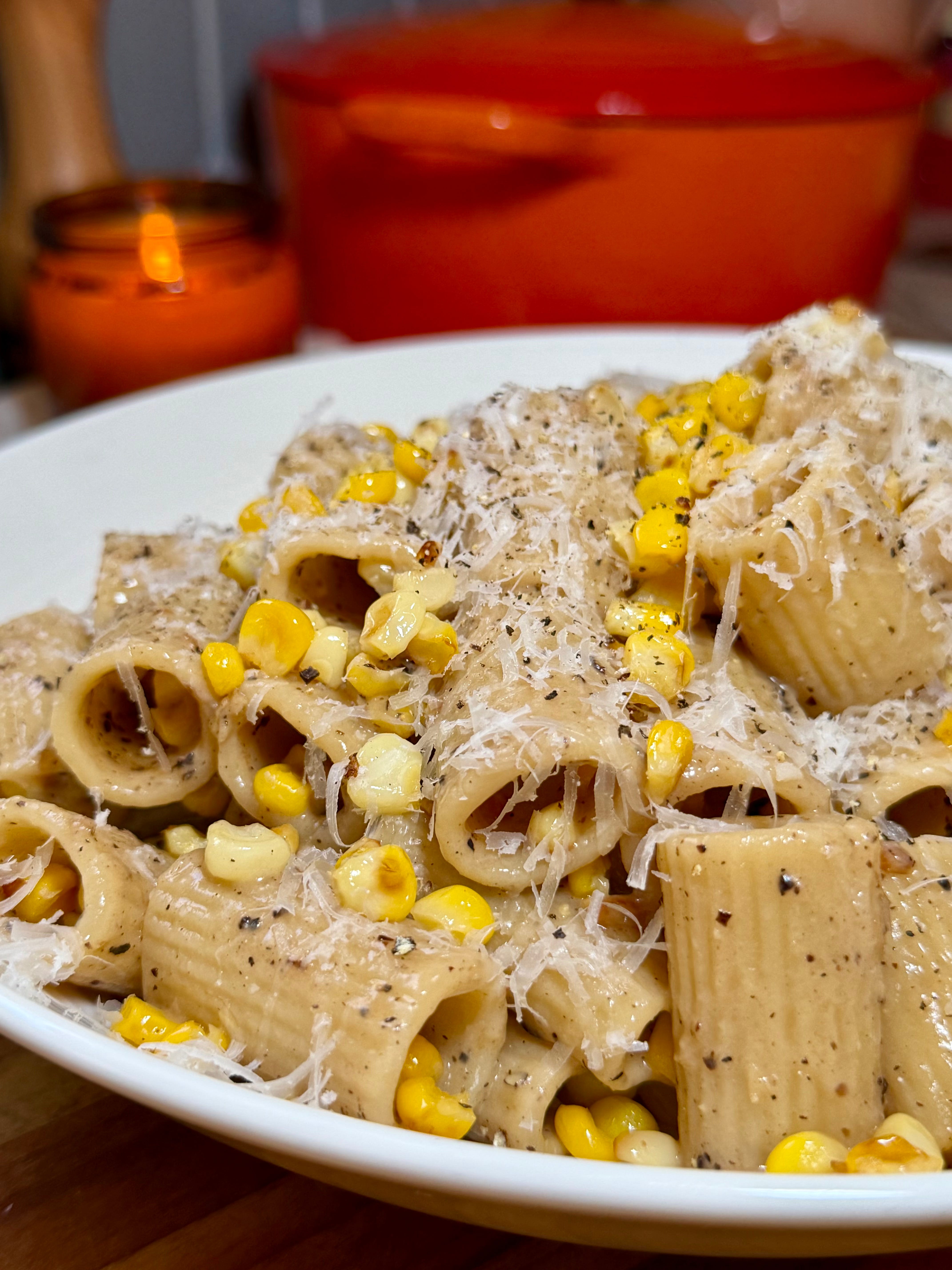
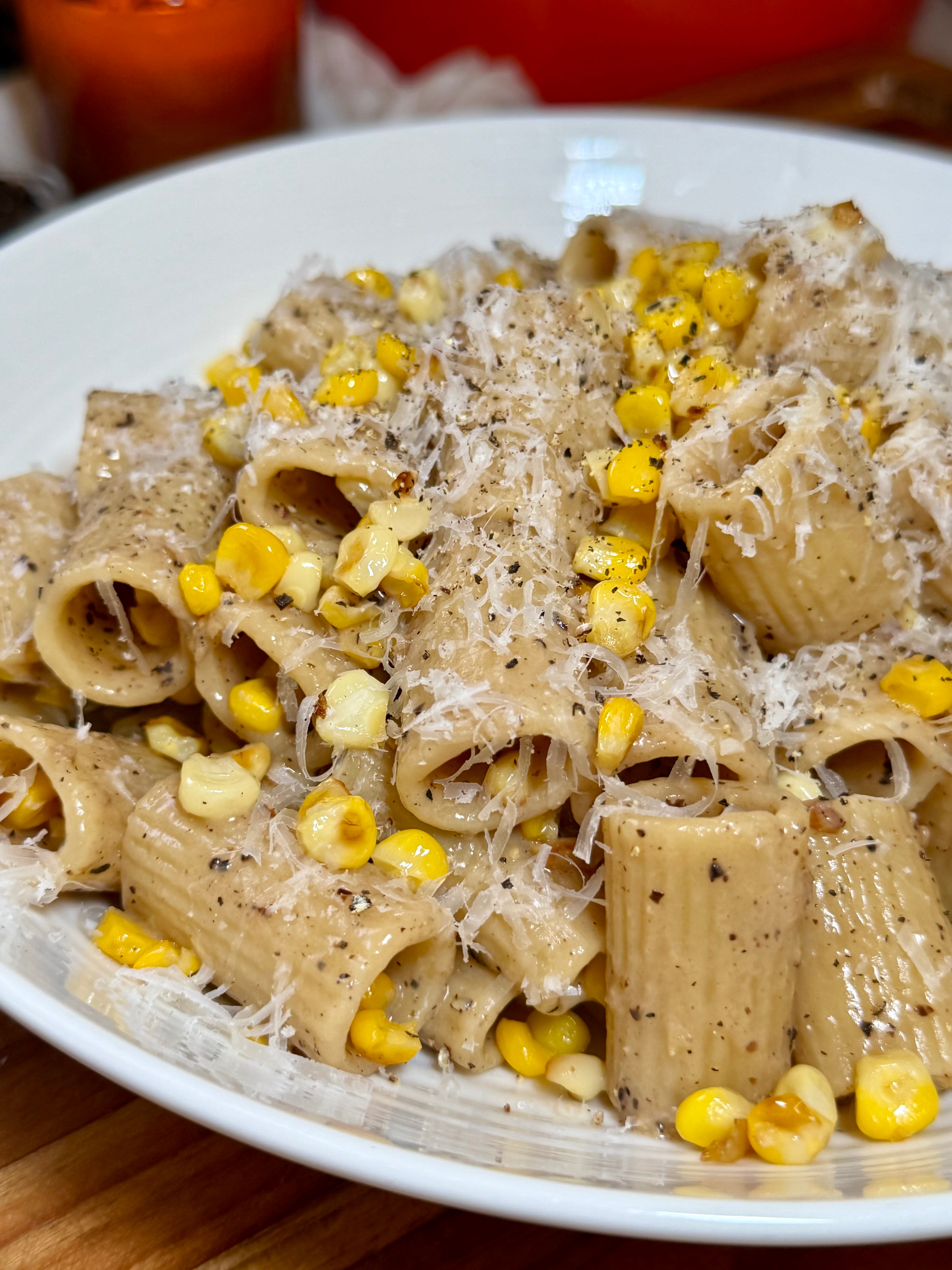
This recipe is my summer take on the Roman classic. Sweet, charred corn adds bursts of natural sweetness that pair beautifully with the salty Pecorino and bold black pepper. It’s simple, seasonal, and a gentle reminder not to be afraid to change up the classics.
Tips to Take It from Good to Great
Boil the pasta in less water than usual. Using about 3 quarts of water instead of a large stockpot creates starchier pasta water, which is the key to a silky, emulsified sauce.
Freshly grate your Pecorino Romano. Pre-shredded cheese doesn’t melt as smoothly and is much more likely to clump.
Reserve plenty of pasta water. You’ll likely use more than you think. If the sauce becomes too thick, a splash of hot pasta water will bring it back to life.
Cook the pasta just shy of al dente. It will finish cooking in the sauce while releasing more starch, creating an even silkier emulsion.
Take the pan off the heat before adding the cheese. High heat can cause the Pecorino to seize and become grainy instead of smooth.
Don’t rush the corn. Let it develop golden brown, lightly charred spots. Those caramelized bits add sweetness and balance the sharp Pecorino and black pepper.
Serve immediately. Like any cacio e pepe, the sauce will continue to thicken as it sits, so you want to go from pot to plate as quickly as possible.
Corn e Pepe (Cacio e Pepe with Summer Corn)
Servings: 2–3
Prep Time: 10 minutes
Cook Time: 20 minutes
Ingredients:
Click here for the printable recipe
½ lb mezzi rigatoni (or other short pasta)
2 ears fresh sweet corn, kernels removed
2 tbsp unsalted butter, divided
1 tsp freshly cracked black pepper, plus more for serving
3½ oz freshly grated Pecorino Romano (about 1¼ cups), plus more for serving
Kosher salt
Optional: 1 tsp finely grated lemon zest
Instructions:
Bring about 3 quarts of generously salted water to a boil. Cook the mezzi rigatoni until 1–2 minutes shy of al dente. Reserve 2 cups of the pasta water before draining.
Meanwhile, heat a large skillet over medium-high heat. Add 1 tablespoon butter, followed by the corn. Spread into an even layer and cook undisturbed for 2–3 minutes before stirring. Continue cooking, stirring only occasionally, until the corn is tender with golden brown, lightly charred spots, about 6–8 minutes. Reduce the heat to medium if needed. Transfer to a bowl.
Return the skillet to medium heat. Add the remaining 1 tablespoon butter and the black pepper. Cook, stirring constantly, until fragrant, about 30–60 seconds.
Add the drained pasta to the skillet along with ¼ cup of the reserved pasta water. Toss over medium heat for 1–2 minutes, adding a splash more pasta water if needed, until the pasta is just al dente.
While the pasta finishes cooking, place the Pecorino Romano in a medium bowl. Let the reserved pasta water cool for about 30 seconds, then gradually whisk in ¼ cup of the pasta water until a thick, smooth paste forms. Add another tablespoon or two of pasta water if needed. The mixture should be smooth and spreadable, similar to mashed potatoes, not runny.
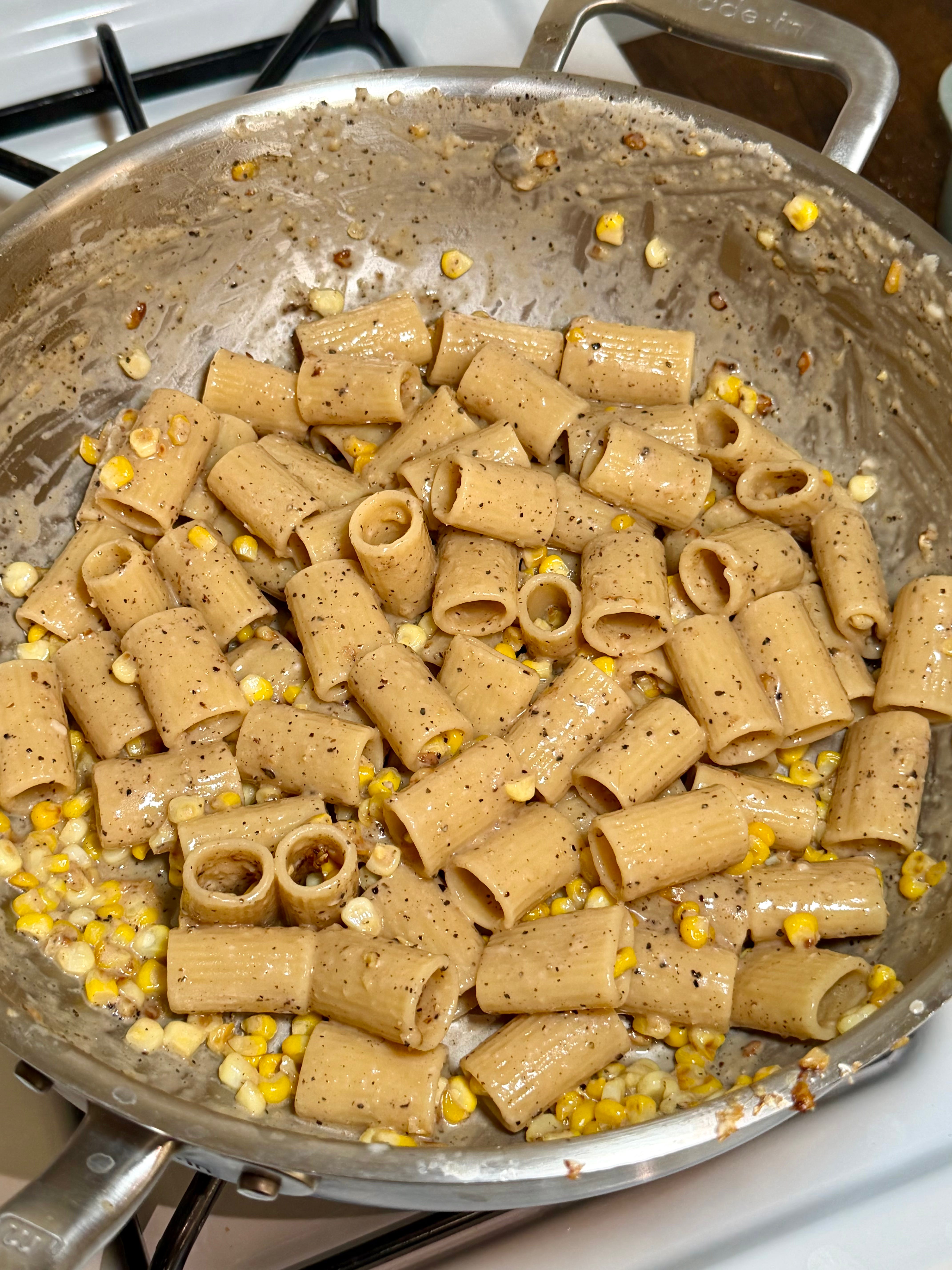
Remove the skillet from the heat and let it cool for about 30 seconds. Add the Pecorino paste and toss vigorously until the pasta is evenly coated. Add more pasta water, a splash at a time, until the sauce becomes silky, glossy, and coats every piece of pasta.
Fold in the charred corn, reserving a small handful for garnish if desired. Stir in the lemon zest, if using.
Divide between bowls and top with the remaining charred corn, more freshly grated Pecorino Romano, and plenty of freshly cracked black pepper. Serve immediately.
Im trying this one tomorrow! Excellent work as usual
This is a masterpiece!!!! I’m in the kitchen now